
What is Kaolin?
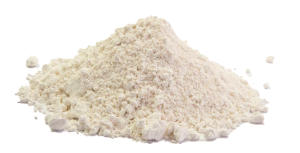 Kaolin is a word that has different meanings and it depends on where and how this word is used. Kaolin is a name taken from the Chinese language and it means top line. In the southeast of China, there is a hill called Kaolin, and white clay is said to have been extracted from there for the first time. For this reason, Kaolin is also called China Clay and White Clay. Other names such as white dirt, chalk are also used for this special mineral.
From the point of view of mineralogy, kaolin is the name of a group of hydrous aluminum-silicate minerals, which includes kaolinite, nacrite, dickite, and halloysite and it is considered one of the most important sedimentary clays that are created due to the impact of epigenetic and hypogenic factors on granite rocks. Granitic rocks entered the earth’s crust as a result of the pressure of the lower layers of the earth, and at the end of the Carboniferous period, as well as between the Carboniferous and Cretaceous periods, they were transformed and turned into kaolin. Kaolin is a unique industrial mineral because it has neutral pH in a wide range and is chemically resistant, white in color, and has good coating properties.
Application of Kaolin
Kaolin is used in various industries as the main raw material and in others as a secondary material along with other materials. The reasonable price and characteristics of this mineral have their own effects on every industry.
The reason for the wide use of kaolin in the industry is that it has the following characteristics:
- Suitable filler and cover
- It remains chemically unchanged over a wide range of pH changes
- Acts as a suitable absorber of ink and colors
- A hardener in the petrochemical industry
- Having a white color that makes it usable as a colorant
- Special polish and whitening ability.
- Catalytic properties
- Having very good filling and covering properties
- Surface softener and its non-abrasiveness
- Little ability to conduct electricity and heat
- Its Economical price
The use of kaolin in the paper industry may be surprising, but an average of fifty percent of this mineral is used in the paper industry. Kaolin whitens paper sheets and prevents them from wrinkling and matting. The reason for the presence of this material in various industries is its white color and soft texture. Most importantly, kaolin does not harm the environment and is never considered a dangerous substance. In such a way that it is used to make some cosmetic products such as sunscreens and toothpaste.
The use of Kaolin in ceramics is also very important. Engineers and ceramic manufacturers use it to improve the quality of ceramic glaze. It is good to know that a material called Ortenvar is used in the body of ceramic tiles. This type of tiles and ceramics can only be used on the floor of the building. In the tiles and ceramics that are considered to cover the walls, they use a substance called Stanver. These two materials improve the quality of ceramic tiles and both are made of Kaolin.
Our Supply of Kaolin
In Iran, Kaolin deposits and kaolin clays are divided into the following 4 groups based on geographical location.
- Kaolin clay reserves in the central parts of Iran
- Kaolin clay reserves in the eastern parts of Iran
- Kaolin clays, in the north and northwest of the country
- Kaolin deposits in the south and southwest of the country
Each area provides a different quality aspect and it is important to professionally handle the right resource for the consumption orders. At Zista Group we have prepared a professional supply chain from Mine to consumer of the material with the below estimated specifications and packaging options:
| OXIDE | Al2O3 | CaO | Fe2O3 | TiO2 | SiO2 | K2O | Na2O | MgO | L.O.I |
| % | 23±1 | 0.14 | 0.14 | 0.48 | 70±1 | 1.2 | 0.13 | 0.12 | 4.3 |
| Reside on a 10µm Sieve: 3% Max | |||||||||
Available Packaging:
- Direct in Jumbo Bags
- 25 kg Bags, Palletized/Loose