What is Feldspars and Pegmatite
Feldspar:
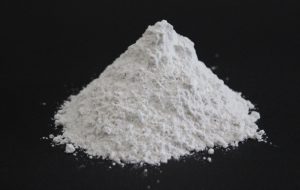 Feldspar is by far the most abundant group of minerals in the earth’s crust, forming about 60% of terrestrial rocks. Feldspar minerals are essential components in igneous, metamorphic, and sedimentary rocks, to such an extent that the classification of several rocks is based upon Feldspar content.
Chemically, the feldspars are silicates of aluminum, containing sodium, potassium, iron, calcium, or barium, or combinations of these elements.
Feldspars are used as fluxing agents to form a glassy phase at low temperatures and as a source of alkalis and alumina in glazes. They improve the strength, toughness, and durability of the ceramic body, and cement the crystalline phase of other ingredients, softening, melting, and wetting other batch constituents.
Pegmatite:
The term feldspar encompasses a whole range of materials. One specific kind of Feldspar is Pegmatite:
Pegmatite can be used as ceramic bodies’ main vitrifying or fluxing agents. As Pegmatite melts gradually over a range of temperatures, it greatly facilitates the melting of quartz and clays and, thanks to an appropriate mixing, allows modulations of the melting stage.
Pegmatites are rocks composed of several minerals, usually feldspar with potassium, quartz, and kaolin. This gives them a natural fluxing capability and, thanks to their low level of colored oxides, they are especially suitable for white tableware.
Generally, all feldspars are sodium based or potassium based while Pegmatite contains high content of potassium and sodium altogether.
Application of Feldspars:
Feldspars are important ingredients in clay bodies and glaze. In both applications, their primary function is to supply fluxes to the formulations, but they do provide additional alumina (Al2O3) and silica (SiO2). Feldspars are naturally occurring minerals and are generally classified as either potash (potassium) or soda (sodium) feldspars based on the predominant alkali metal element (the flux) that is present.
Potassium feldspar melts at around 1,200 °C (higher than sodium based feldspar) producing a more viscous melt than does sodium feldspar. It can also produce a crystalline phase (leucite) that contributes to opacity. Thus, in industry, potassium based feldspars are often used more for matte glazes while sodium based feldspar is used for glossy glazes.
Glazes high in feldspar (35% or more) are overwhelmed by problems, yet are still used by tens of thousands of potters. ‘Flux saturated’ glazes with more than 50% feldspar may be unbalanced and lack adequate glass former or alumina to create a stable hard glass resistant to leaching. Feldspars are primarily used in industrial applications for their alumina and alkali content.
In sanitaryware, pegmatite enables vitrification thus making the heated piece non-porous. Relative alkali content (sodium to potassium ratio) controls of the aggressiveness of vitrification and influences final porosity and fired deformation.
Pegmatite is characterized by its high potassium content and low iron and titanium content – ideal for whiteness and translucency in tableware and sanitaryware.
Most of the products we use on a daily basis are made with feldspar and pegmatite: glass for drinking, glass for protection, fiberglass for insulation, the floor tiles and shower basins in our bathrooms, and the tableware from which we eat. Feldspar is part of human daily life.
Key benefits of Feldspar:
- Enables to lower the heating temperature or shorten the heating cycle, resulting in energy and CO2 savings thanks to a better balance of the fluxing oxides
- Allows consuming less raw materials by limiting shrinkage during heating process
- Enhances the mechanical strength of the tile
- Improves the body whiteness
Our Supply of Feldspar
Iran’s known feldspar mines are related to intrusive masses and the locations are mostly in fault and tectonic zones. it is safe to say that because Iran is an active land, feldspar deposits are naturally abundant in it. Iran’s known feldspar mines are mainly associated with acidic intrusive masses such as granites and granitoid and there are large mines production of Feldaspars located in the provinces of Khorasan, Zanjan, Azerbaijan, Gilan, Tehran, Yazd, and Sistan. At Zista Group we have prepared a professional supply chain from Mine to consumer of the material with the below estimated specifications and packaging options:
| OXIDE | Al2O3 | MgO | Fe2O3 | TiO2 | SiO2 | Na2O | K2O | CaO | L.O.I | SO3 |
| % | 14.41 | 0.15 | 0.11 | 0.08 | 74.21 | 4.42 | 4.64 | 0.65 | 0.68 | 0.01 |
| Reside on a 53µm Sieve: 3% Max | ||||||||||
Available Packaging:
- Direct in Jumbo Bags
- 25 kg Bags, Palletized/Loose